Quick Summary
-
You can do many SEO tasks yourself — especially content, keyword research, and on-page optimization.
-
More complex areas like technical SEO, Core Web Vitals, link building, and structured data are usually best outsourced.
-
DIY SEO is cost-efficient, but SEO done for you delivers scalability, technical accuracy, and long-term momentum.
-
This SEO DIY guide explains exactly what you can handle in-house and what requires expert help.
If you’re wondering how to improve my website SEO without relying on expensive agencies, you’re not alone. Many business owners and marketers ask the same question: Can I do my own SEO?
The short answer is yes you can. And with the right DIY SEO strategies, tools, and consistency, you can achieve meaningful results.
But DIY SEO has limits. At some point, businesses outgrow basic tactics and need SEO done for you services to scale faster.
This guide breaks down everything you need to know:
-
How DIY SEO works
-
The best do it yourself SEO tips
-
Exactly how to do SEO step-by-step
-
A practical SEO DIY guide
-
When to outsource for more advanced growth
Let’s dive in.
What Is DIY SEO?
DIY SEO (Do-It-Yourself SEO) refers to using your own time and skills to improve your website’s ranking without hiring an SEO agency. It includes tasks like:
-
Optimizing pages
-
Improving website content
-
Performing keyword research
-
Fixing technical issues
-
Tracking performance
You don’t need to be a technical expert. You just need the right framework and a clear, consistent system.
This guide will show you how do I do my own SEO even if you’re starting from scratch.
Is It Possible to Do SEO Yourself?
Yes, you can absolutely do SEO yourself if you follow the right steps and understand how search engines work.
SEO is made up of three major parts:
1. On-Page SEO
Everything you optimize directly on your website such as:
-
Titles
-
Meta descriptions
-
URLs
-
Keywords
-
Internal linking
-
Content quality
2. Off-Page SEO
Primarily backlinks from other websites that improve your authority.
3. Technical SEO
How well your website can be crawled, indexed, and loaded by search engines.
This includes:
-
Speed
-
Mobile responsiveness
-
Core Web Vitals
-
Sitemaps
-
Robots.txt
If you can learn these elements step-by-step, DIY SEO absolutely works.
Why DIY SEO Works (Especially for Small Businesses)
DIY SEO is effective because:
1. You understand your business better than anyone
No agency knows your customers’ questions and pain points like you do.
2. Tools make SEO easier than ever
Platforms like Semrush, Ahrefs, and Google Search Console simplify complex tasks.
3. Many ranking factors are content-related
And you can optimize content without technical skills.
4. SEO rewards consistency more than expertise
Google prefers websites that are:
-
Active
-
Updated
-
Helpful
-
Relevant
Even if you’re a beginner, you can outperform competitors who aren’t consistent.
How to Do SEO Yourself: A Complete SEO DIY Guide
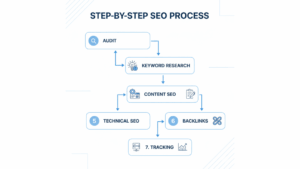
Below is a professional, step-by-step system used by industry leaders. Follow each step carefully it’s designed for beginners but structured like an agency workflow.
Step 1: Start With a Full Website SEO Audit
Before you improve anything, you need to see what’s wrong.
Use tools like:
-
Google Search Console (free)
-
Google Analytics 4
-
Ahrefs Webmaster Tools (free version available)
-
Screaming Frog SEO Spider
Audit for:
-
Broken links
-
Duplicate pages
-
Missing meta tags
-
Missing alt text
-
Slow-loading pages
-
Indexing issues
-
Keyword cannibalization
This gives you a clear roadmap of what needs fixing.
Step 2: Keyword Research Find What Your Customers Search For
If you want to know how to improve my website SEO, keyword research is step one.
Use:
-
Ahrefs
-
Semrush
-
Google Keyword Planner
Target three types of keywords:
1. Short-tail (broad searches)
Example: “SEO tips”
2. Mid-tail (more specific)
Example: “do it yourself SEO tips”
3. Long-tail (high intent, easier to rank)
Example: “how do I do my own SEO for a small business website”
Include your primary keywords naturally across content, such as:
-
DIY SEO
-
SEO DIY guide
-
How to do SEO
-
SEO done for you (for comparison sections)
Step 3: Optimize Every Page (On-Page SEO)
On-page optimization is the core of DIY SEO.
Optimize:
-
Titles (H1)
-
Subheadings (H2–H4)
-
Meta descriptions
-
URL structure
-
Image alt text
-
Internal links
Example Title Optimization
Before: “Services”
After: “Digital Marketing Services for Small Businesses | Affordable SEO & Web Design”
Use Keywords Naturally
Example:
If you want to know how to improve my website SEO, one of the easiest steps is optimizing each page with clear titles, descriptions, and helpful content.
Step 4: Publish High-Quality, Helpful Content
Google rewards expertise and clarity.
Create:
Blogs
Answer real customer questions.
Include keywords like:
-
How do I do my own SEO
-
How to do SEO
-
Do it yourself SEO tips
Service Pages
Explain what you offer and why you’re the right choice.
How-To Guides
Like this one Google loves tutorials and structured content.
Content Formatting Tips
-
Use short paragraphs
-
Add bullet points
-
Use question-based H2s
-
Add internal links
-
Keep content updated
Step 5: Improve Technical SEO
Even the best content won’t rank if your website is slow or poorly structured.
Fix These:
-
Mobile responsiveness
-
Page speed (Core Web Vitals)
-
Sitemap updates
-
Robots.txt optimization
-
HTTPS security
-
Clean URL structure
Use:
-
Google PageSpeed Insights
-
GTmetrix
-
Cloudflare for caching
Technical SEO can be tricky. Many businesses outsource this part once they outgrow beginner DIY SEO.
Step 6: Build Authority With Backlinks
Backlinks are “votes of trust.”
Best ways to earn them:
-
Guest posting
-
Local citations
-
Partnerships
-
HARO journalist responses
-
Creating link-worthy content (statistics, tools, templates)
If you want long-term results, maintain a consistent monthly link-building plan.
Step 7: Track Your SEO Performance
No SEO strategy is complete without tracking.
Measure:
-
Impressions
-
Clicks
-
Keyword ranking positions
-
Bounce rate
-
Engagement time
-
Backlinks
-
Conversions
Tools:
-
Search Console
-
GA4
-
Semrush Position Tracking
SEO is not one-time work. It’s continuous improvement.
Step 8: Stay Updated With SEO Trends
Google updates its algorithm constantly.
Stay informed with:
-
Semrush Blog
-
Search Engine Journal
-
Ahrefs SEO Blog
Following trusted sources helps you avoid outdated techniques.
When Should You Switch From DIY SEO to SEO Done For You?
DIY SEO works beautifully in the early stages, but as your business grows, you hit limitations.
You should consider outsourcing when:
1. You’re not seeing the results you expected
If traffic has plateaued or rankings aren’t improving, it may require advanced strategy.
2. You don’t have time to execute SEO consistently
SEO requires:
-
Weekly content
-
Monthly audits
-
Constant keyword optimization
-
Backlink outreach
If you can’t maintain all of this, results slow down.
3. You need advanced technical SEO
This includes:
-
Schema markup
-
Core Web Vitals optimization
-
Crawl-depth management
-
Log file analysis
-
Complex site migrations
These tasks typically require professional help.
4. You want to scale faster
Agencies offer:
-
Dedicated keyword analysis
-
Competitor tracking
-
Lead-focused content
-
Strong backlink acquisition
-
Conversion optimization
This accelerates growth compared to DIY SEO alone.
5. You’re entering a competitive niche
Industries like finance, law, insurance, and healthcare need strong, ongoing SEO campaigns.
DIY SEO vs SEO Done For You: Which Is Better?
| Feature | DIY SEO | SEO Done For You |
|---|---|---|
| Cost | Low | Medium–High |
| Control | Full | Shared |
| Skill Needed | Moderate | None |
| Time Required | High | Low |
| Speed of Results | Slow–Moderate | Fast |
| Scalability | Limited | High |
| Best For | Startups, new sites | Growing businesses |
Both paths work—but at different business stages.
Can You Do SEO Yourself?
Yes you can improve your website’s SEO yourself using clear, structured steps and consistent effort.
With the right DIY SEO strategies, tools, and content, you can absolutely rank higher and grow traffic.
But as your business scales and competition increases, switching to SEO done for you services becomes essential for faster and more predictable results.
Whether you’re learning how to do it for the first time or building a long-term strategy, the key is consistency, high-quality content, and understanding what your users are searching for.